
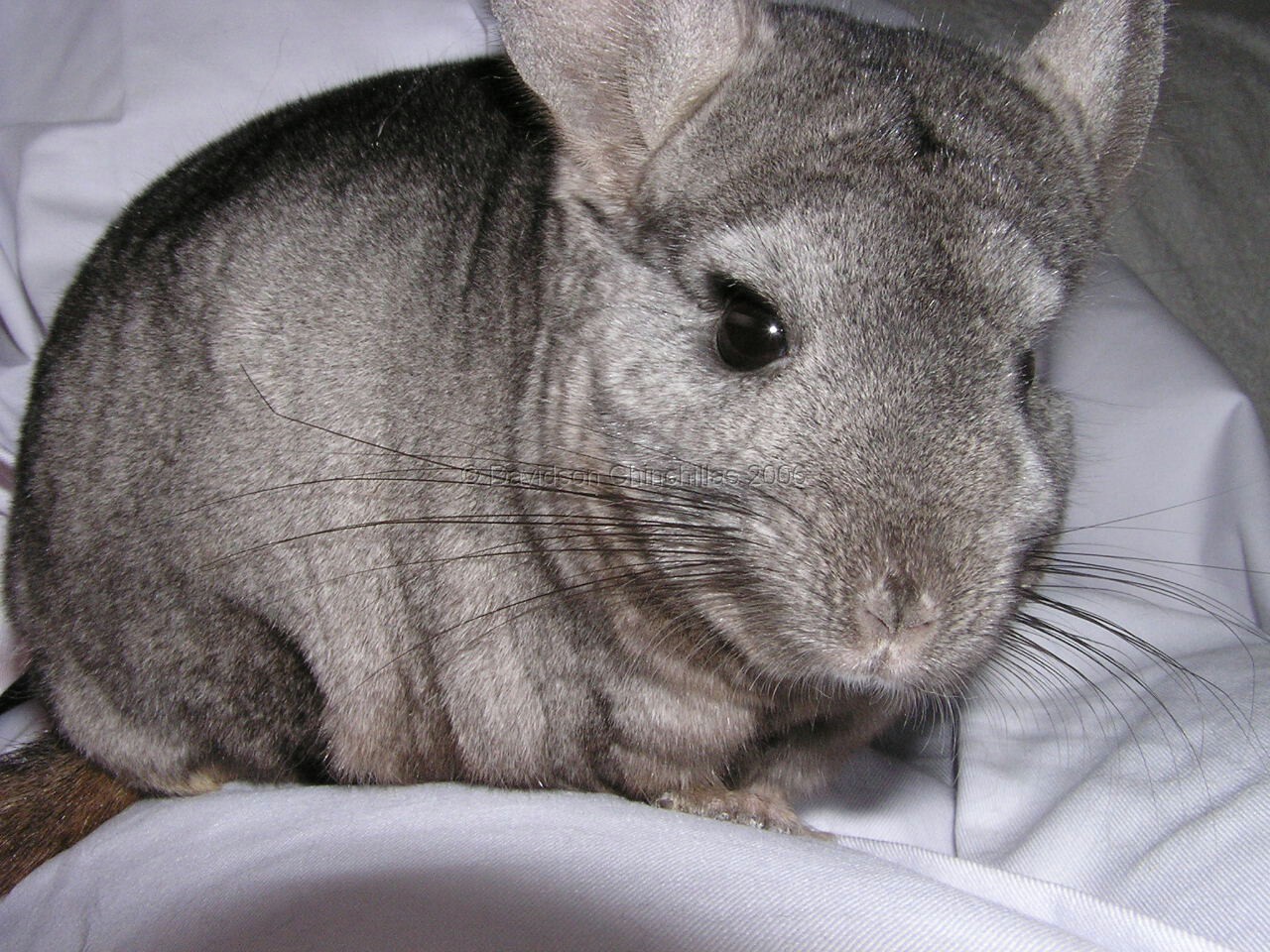
This is just a quick guide for anyone thinking about buying a chinchilla. Established chinchilla owners should know the basics already.
It is worth considering whether or not a chinchilla is the right pet for you.
Below are some general pros and cons on chinchilla keeping. These are based on my own experiences. Please remember that there are exceptions to every rule.
Is a chinchilla a suitable pet for you?
* Chinchillas can be nervous and highly-strung. Therefore are not always suitable pets for very young children or very busy, noisy households. They are able to adapt if given peace and quiet at times.
* Chinchillas have very delicate skeletal structures and can be easily injured with clumsy or heavy-handed handling. Young children may be so excited by handling a chinchilla that they try too hard and are accidentally too rough. Supervision is always necessary.
* They can take a long time to settle down and overcome their natural fear of people. They need time and patience when settling them into a new home.
* Chinchillas can live for over 20 years – although 8-10 years appears to be the average life-span. They are a long-term commitment like a cat or dog.
One chinchilla or a pair?
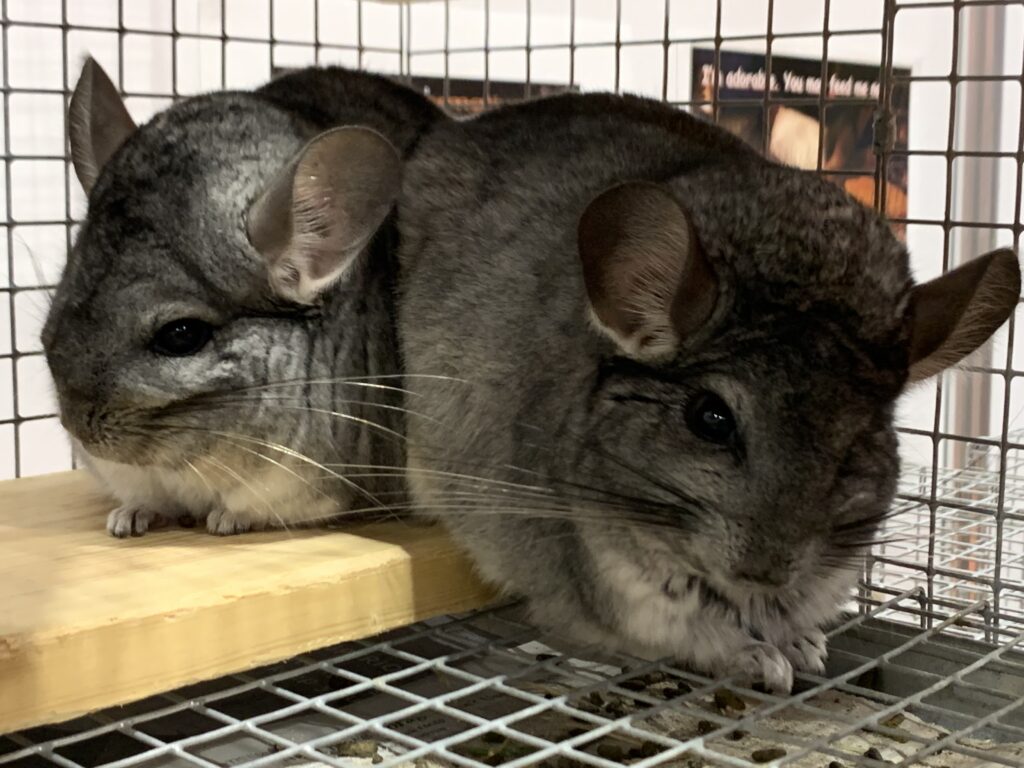
Chinchillas do like company and are social animals, therefore:
* If kept alone, they require plenty of daily attention (and reasonable exercise) to avoid boredom and loneliness. Single chinchillas can bond with their owner and make great companions.
* It is not recommended to keep mixed sex (male/female) pairs together. Breeding chinchillas is not for the beginner – there are associated care needs to consider. For example, spare cages will be required for weaning litters. Also for separating the female from the male periodically, to avoid over-breeding. Male chinchillas can be castrated as a final option. However, all operations carry a risk and a good chinchilla-competent vet is a must.
* Same-sex pairs can be kept together, provided they have been slowly introduced to each other (preferably as youngsters). Caution should be taken when caging males together; they have been known to fight when they reach maturity or if nearby females are in season.
* Although chinchillas can adapt to your life-style to a certain extent, they are generally crepuscular by nature (most active at dawn and dusk), and can be noisy during the night, especially if kept in a bedroom.
* Their diet of hay and the need for a regular dust bath can prove to be problematic for asthmatics or anyone with allergies.
* Chinchillas are not always compatible with other pets. For instance; noisy parrots kept in the same room can cause stress-related behavioural problems in chinchillas. The same is true for cats and dogs, who are predators to chinchillas. There is also the potential for diseases to spread from one animal to another (called, zoonosis), such as pasteurella that can be fatal for chinchillas.
It is worth considering if you can provide a room specifically for the chinchilla so that other animals cannot access them or their cage.
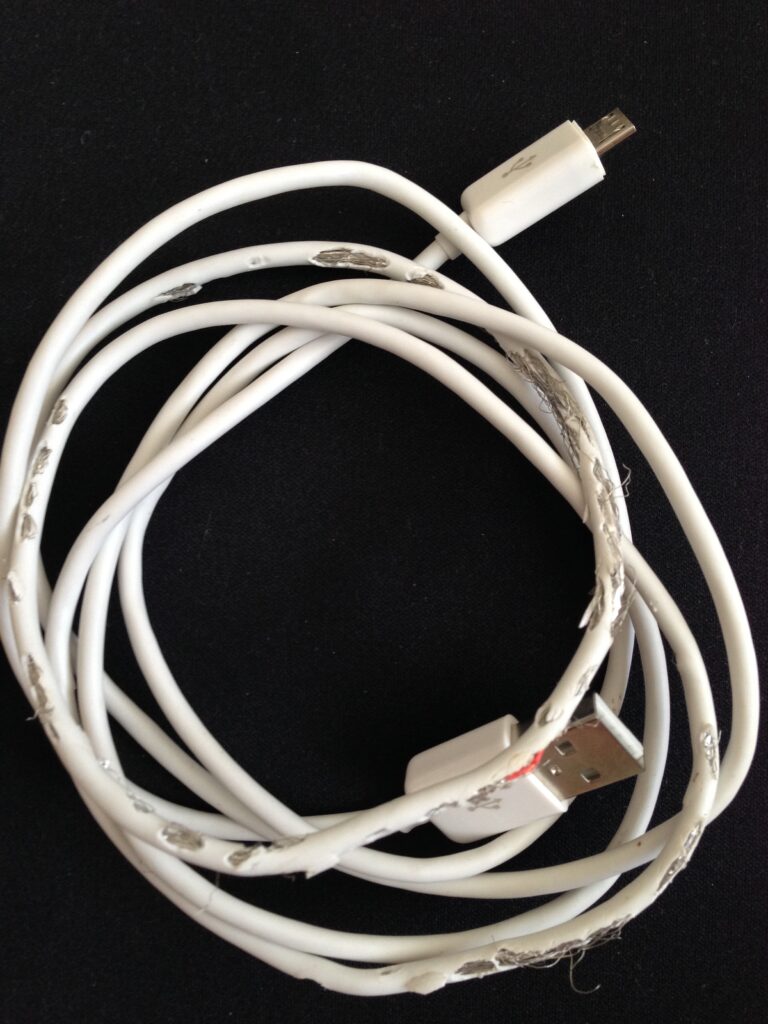
* Chinchillas chew absolutely everything. They can be very destructive if allowed free-access around the house for exercise.
Their instinct is to chew not only hard objects such as chairs and tables but also wires. It is important to “chinchilla proof” an area of the house to preserve your furniture and electronics.
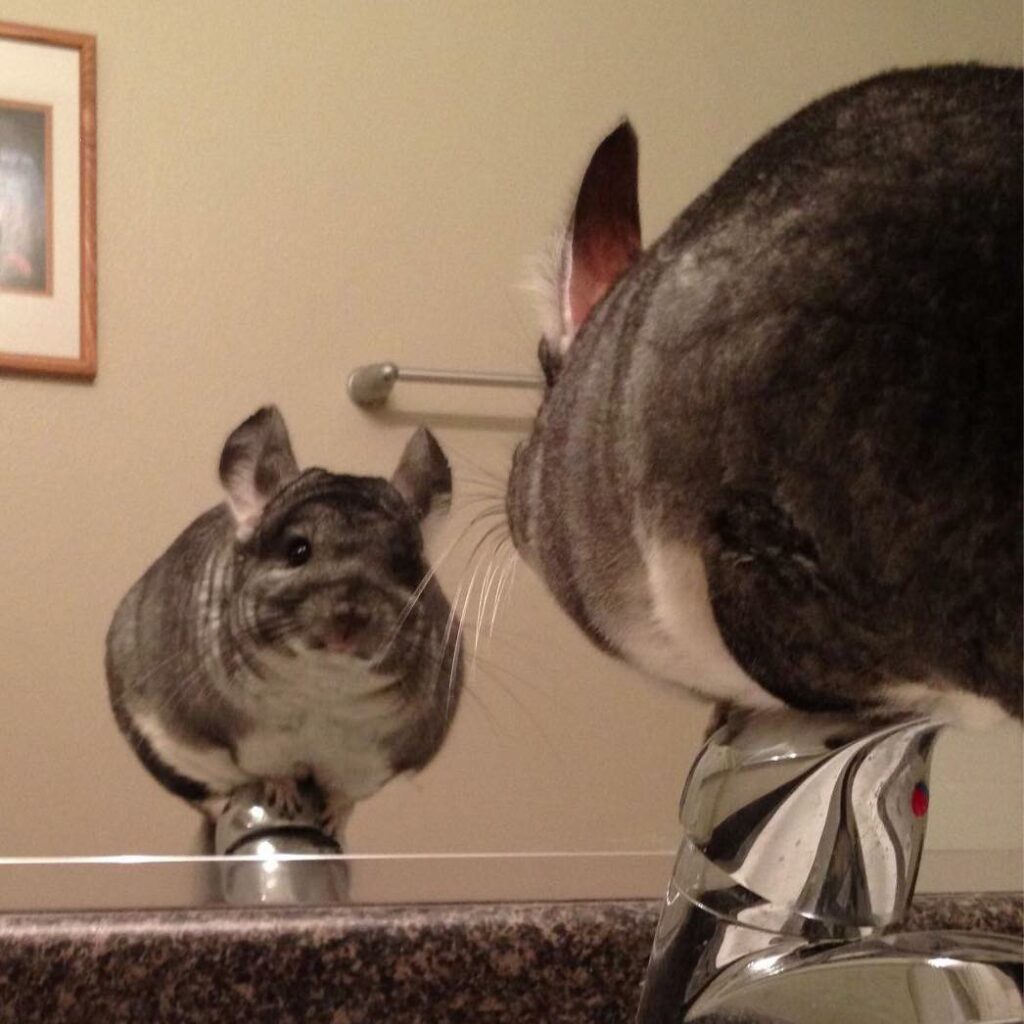
* Remember to keep those toilet seats down too. Sadly, chinchillas have been known to jump into a toilet when the lid has been left off, with fatal consequences.
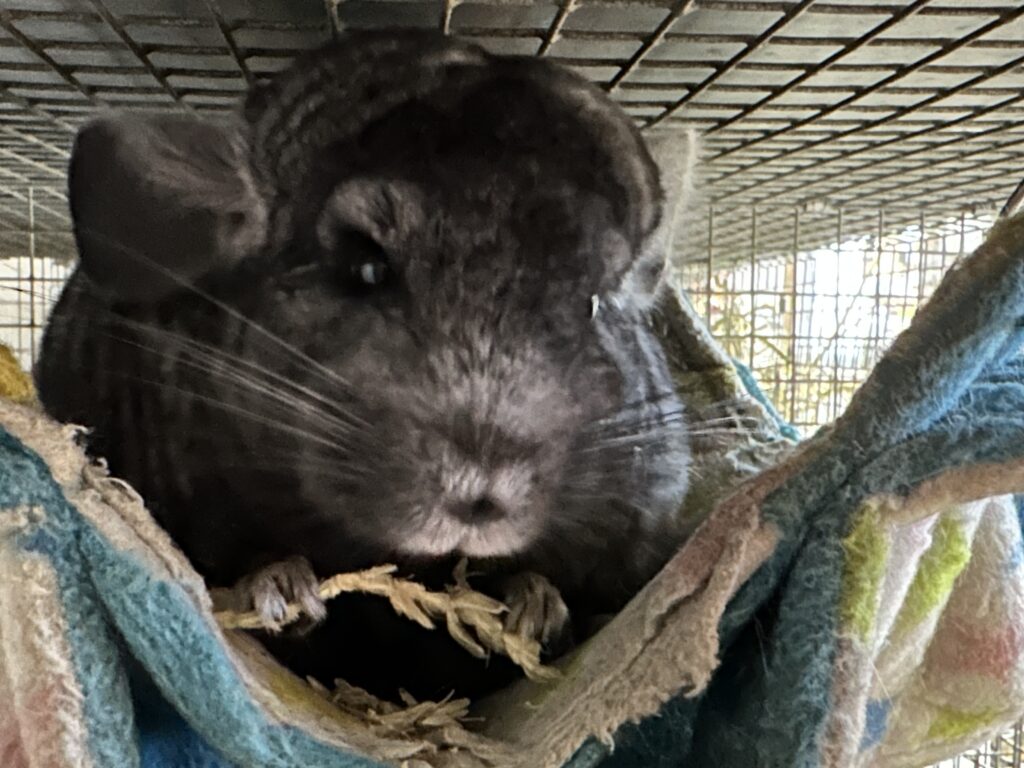
Where to buy a chinchilla
The recommendation is to purchase privately or from a breeder, it is rare to find a chinchilla in a pet shop. Pet rescues may also have chinchillas for rehoming, although there are not many specialist chinchilla rescues (in the UK, at least). Chinchillas are available to purchase online. The caveat of “Buyer Beware” always applies.
There are several things to consider when purchasing a chinchilla privately:
* You may be able to get some background history with your chinchilla, which is important if considering purchasing breeding stock, as some problems can be genetic/hereditary.
* You should be able to get an accurate age of the chinchilla you intend to purchase.
* You should also be able to get some experienced advice on their care and husbandry requirements.
* If possible, continuing with their current feed is important. When purchasing a chinchilla, ask or buy for some of their pellets. Many breeders will provide some pellets at the time of sale. Sudden diet changes can cause serious stomach upsets so it is best to avoid this.
* Accessories and equipment may also be available at “cheaper-than-petshop” prices.
* You can also take your time to evaluate and look-over the chinchilla as it should be more relaxed in its familiar environment.
What to Look For
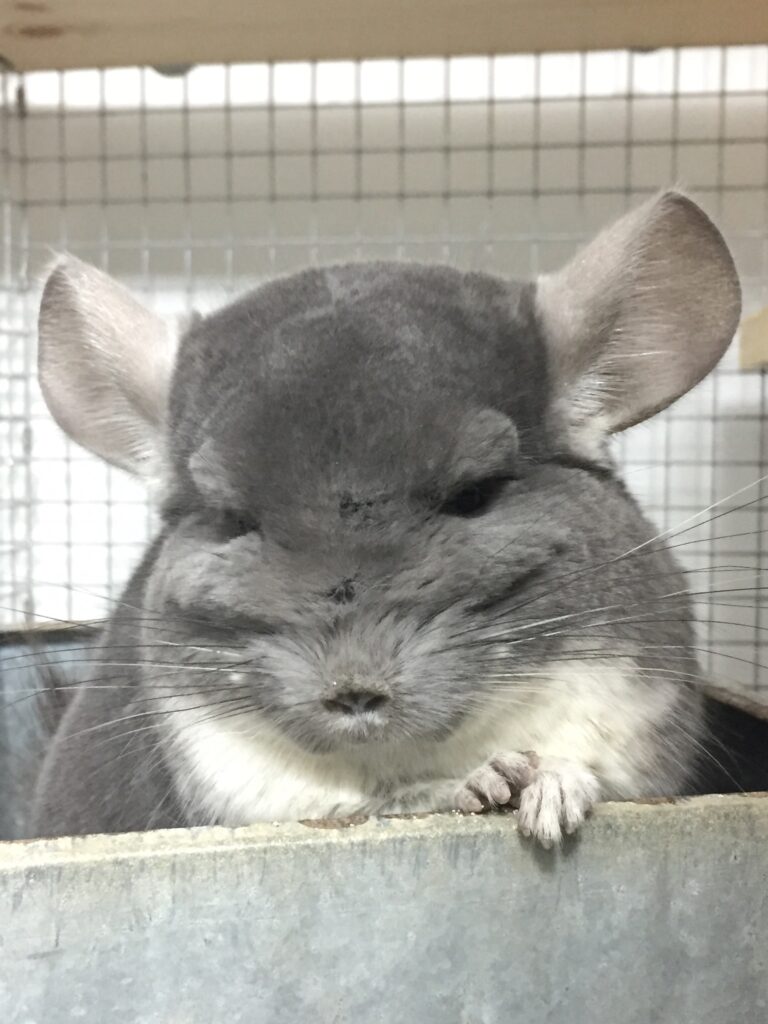
* Bright, wide-open eyes, with no signs of discharge or flattening of fur around them.
* Ears that are clean and held erect. Sleepy chinchillas often have their ears held flat against their head.
* Nose – clean and dry.
* Genital/anal regions clean and dry and free from soiling.
* Fur should be velvety and plushy-looking with no matted or bald areas.
* The chinchilla should feel firm and solid and certainly not bony when handled.
* The front incisors should be even and chisel-shaped, and a dark yellow to orange colour (if the chinchilla is adult).
* Droppings should be of normal appearance (dark, smooth, plump and oval – like a small cavy dropping).
Normal Chinchilla Behavioural Responses
Chinchillas may be nervous around strangers, but don’t let that put you off. A healthy chinchilla is a naturally curious animal and if you place your hand quietly in its cage it should eventually come forward to gingerly sniff and explore your hand.
There are few differences between males and females, and both make suitable acquisitions as pets, with regard to their general behaviour.
A frightened or unsocialised chinchilla may spray you with urine or rear up onto its back legs, baring its teeth and “growling” at you. They may still make good pets eventually, with time and patience, but some people may prefer to start off with a chinchilla that is slightly less intimidated by people.
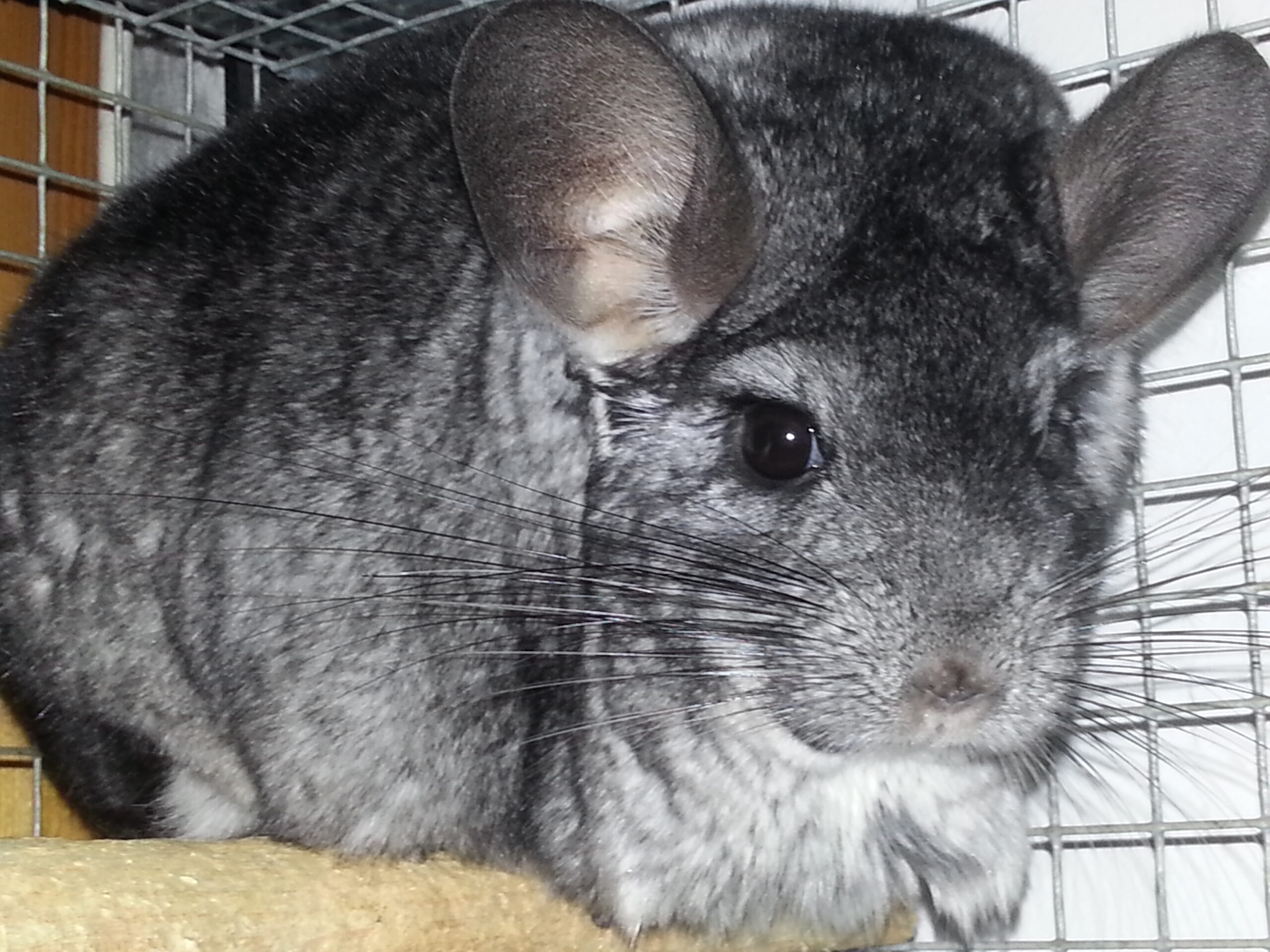
Transporting your new chinchilla home
* Always bring a suitable chew-proof container to transport your new pet home in. Some breeders will allow you to buy a small show-cage from them, which doubles as a carrying cage.
* Flimsy cardboard boxes are not suitable for long journeys, as chinchillas are quite capable of chewing large holes in them, in a relatively short period of time.
* Although most chinchillas will not eat during transit, a handful of hay should at least be offered if the journey is likely to exceed 2 hours.
* DO NOT be tempted to travel with a chinchilla if it is a hot day. Chinchillas are very susceptible to the heat and even a short journey can increase the risk of heat-stroke. If you have a car air-conditioning, put it up on full, and screen the windows to block out any direct sun. An alternative is to travel at night, using the car’s air-conditioning, when the temperature has dropped.
Some settling-in tips
* DO NOT put your chinchilla straight in the same cage with an existing chinchilla. Chinchillas are territorial, and may fight, with sometimes fatal results.
* It is wise to keep a new chinchilla quite separate from existing chinchillas, for at least a fortnight. This is to ensure that your new purchase is free from any contagious ailments that may be passed onto existing stock. Quarantining new pets is something often over-looked by pet owners.
The quarantine period also allows you, as a new owner, to observe your new chinchilla to see what its normal behaviour is like.
* Give your new chinchilla plenty of time to settle into its new environment. A happy chinchilla should feel safe and secure in its new cage and this will help the chinchilla to become more confident. A nestbox or suitable hammock (such as those available from Fuzzbutts Cage Comforts) placed in the cage will give the chinchilla somewhere to hide away in if it feels frightened.
* Try to keep the new chinchilla on the same food that it has been used to. Any change of diet should be done slowly to avoid possible stomach upsets.
* Introduce potential cage-mates to each other very slowly (by initially caging side-by-side, then allowing the chins to exercise together on neutral territory, supervised at all times). It can take weeks before they accept each other well enough to be caged together and some chinchillas never get on – in this scenario, a separate cage arrangement will be required.
Once settled into its environment, a chinchilla makes an enchanting and intelligent pet. They are not overly-demanding, and may long outlive a domestic cat or dog. They cannot harbour fleas, do not smell and do not require vaccinations or daily walks. Their dietary requirements are relatively easily and inexpensively catered for too.
As they spend most of their time asleep during the day they make excellent pets for people who have to work full-time.
Leave a Reply