
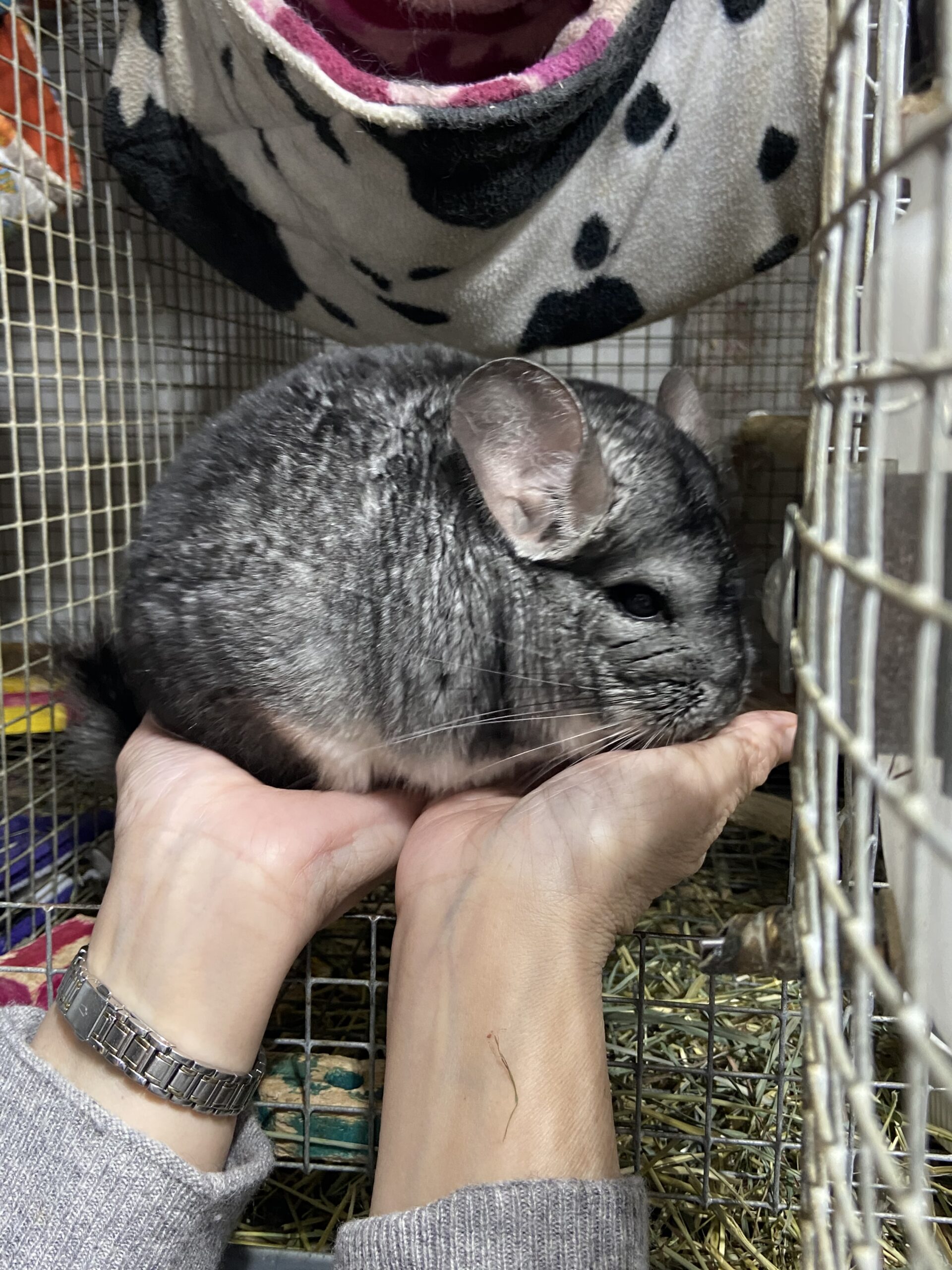
Mousey ears, large eyes with vertical slit pupils, kangaroo back legs, softest fur, huge whiskers …. it’s a chinchilla.
A creature of beauty, with the plushest of fur, once they get to know you, a chinchilla can be a wonderful pet for an adult.
They sleep all day and are ready to play when you get home from work … just keep a close eye on them or they will chew your favourite shoes, antique furniture, and any loose electric cables to shreds.
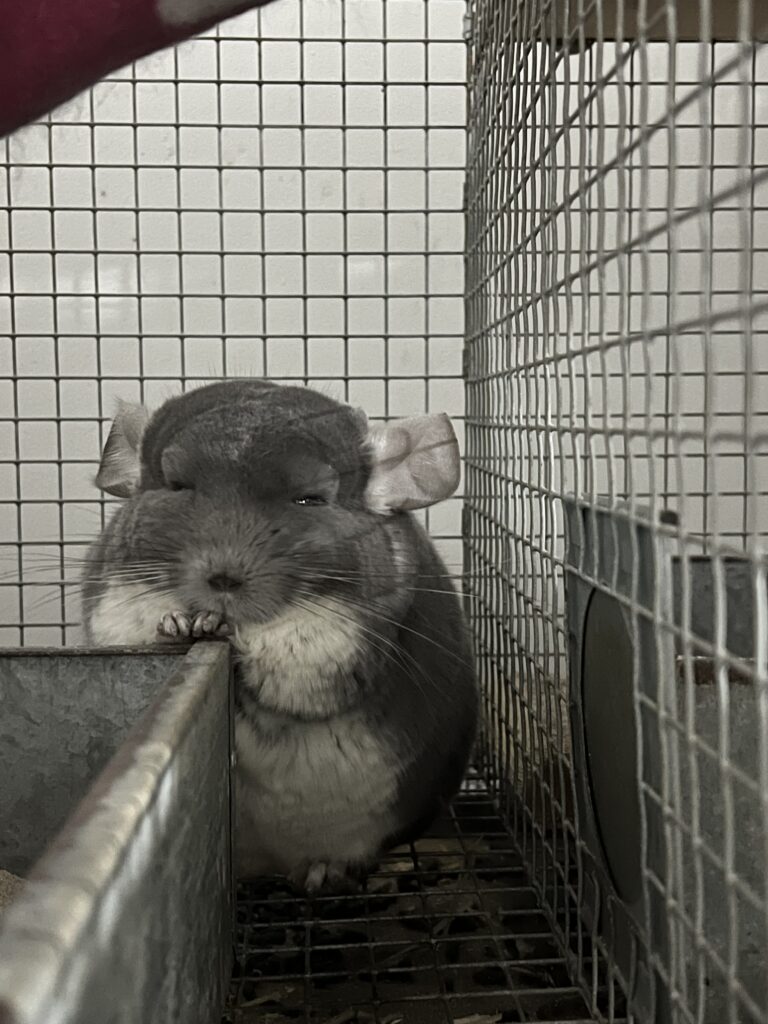
Chinchillas are classified as rodents from the family chinchillidae which consists of chinchillas and viscachas. They originate in the upper Andes region of Chile, Peru, and Argentina.
They are crepuscular, meaning they are most active at dusk and dawn, however, they are also active throughout the night – something to be considered before choosing a chinchilla as a pet; when they are bouncing around their cage or chewing on wood, they are loud!
A Brief Chinchilla History
The origins of man’s relationship with the beautiful, charismatic, mischievous, and inquisitive little creature known as a chinchilla is shrouded in the mists of time and legend. The chinchilla is a small, rabbit-sized rodent which originated in Peru, Chile, Bolivia, and Argentina. Once prized by ancient tribes and royalty the chinchilla has been hunted for food and fur, removed from it’s native lands to farm, and now has a special place in many homes as a much loved pet. What follows is a brief history of the chinchilla from ancient times up to the present.
Long before Columbus discovered America , chinchillas were hunted by the Chincha Indians who valued them for both their meat and their luxurious fur. The Incas conquered the Chincha Indians and the chinchilla became the spoils of victor however, after the conquest, only Inca royalty were allowed to wear the highly valued, beautifully soft, and warm furs; which they did, alongside ceremonial feathers. The pelts were used to adorn their dwelling places and were also worn as “badges of distinction” (1. Bowen and Jenkins, 1969).
In the 1500s the Spaniards conquered the Incas and named the beautiful little grey and white furry animals “Chinchillas” meaning “Little Chincha”. Chinchilla robes were sent to Spanish Royals, setting court fashion, but it was not until the 1700s that chinchilla fur became popular throughout Europe.
Sadly this was the beginning of a massive decline for the wild chinchilla and in the 1800s chinchilla furs were exported from South America in great quantities. The early 1900s saw the South American government place an export duty on all skins leaving the country in an effort to slow down the decline of the chinchilla population however, this did not stop the exploitation of the chinchilla and in 1910 the four South American governments concerned set up regulations which prohibited the trapping and killing of the chinchilla. They even encouraged raising the animals in captivity in their native countries.
1918 saw an American working in Chile, called Mathias Chapman, meeting his first chinchilla. He was fascinated and intrigued by the inquisitive and beautiful little creatures. It was this fascination which led to the long and arduous process of capturing and eventually gaining permission to export 11 chinchillas to California (which he accomplished in 1922).
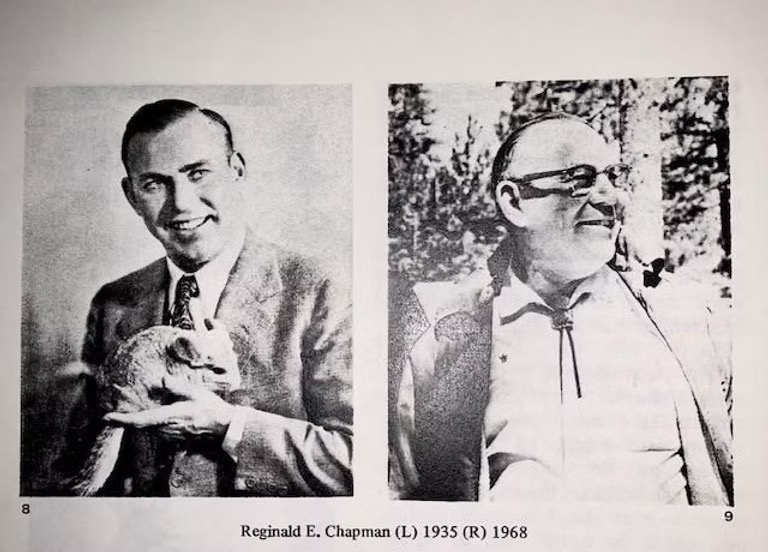
The journey for the chinchillas was a difficult one and Chapman spent most of the trip down in the hold with the chinchillas, ensuring their (relative) comfort. This included using huge blocks of ice to keep them cool. Despite the difficulties, Chapman persevered and started up the first chinchilla ranch in the US. Thus, the chinchilla fur farming industry came into existence in 1923.
Over the next few decades more chinchilla ranches were set up in the US, in Canada, and in Europe. In the late 1950s and early 1960s colour mutations began to appear in various ranches and the standard grey chinchilla with it’s pure white contrast belly was joined by the Tower Beige, Wilson White, Gunning Black, Larson Sapphire, Sullivan Violet, Broucke Charcoal Brown etc.
Happily for the chinchilla, there are no chinchilla farms in the UK now due to legislation prohibiting the raising of animals for pelting. There are several breeders in the UK however, who have considerable numbers of chinchillas, but these are now bred mainly for the pet market and for showing.
The chinchilla is still classed as an “exotic” but they have become increasingly popular as pets. They are intelligent, charming, highly inquisitive bundles of mischief, and have distinctly individual characters. Their curiosity is a delight to watch when they are investigating a new toy, a new cage or exercise environment and there is nothing more magical than touching or stroking the soft fur on a chinchilla’s chin whilst they close their eyes in contented bliss.
Whilst the number of domestic chinchillas is growing due to their popularity as pets and their continued use for the fur trade (in countries other than the UK), wild chinchillas are listed as an endangered species. Chinchilla populations in the wild have been decimated by past hunting and trapping for fur but the biggest current threat to their continued survival is habitat destruction.
The plight of the chinchilla in the wild is internationally recognised. A new project led by the Zoological Society of London has been launched. Called the EDGE project (Evolutionarily Distinct & Globally Endangered), it seeks to raise awareness and conservation for the “forgotten” animals which are literally on the edge.
” EDGE species are truly one of a kind. If they disappear there will be nothing similar left on the planet. Two-thirds are receiving little or no conservation attention.”
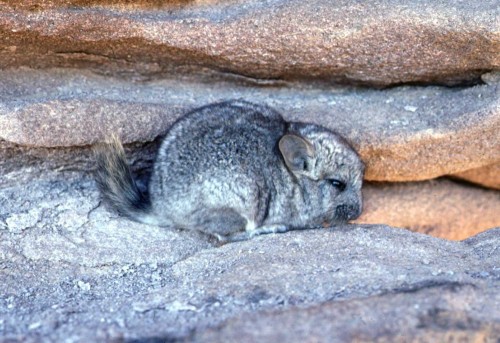
In the wild, both the short tailed chinchilla (chinchilla chinchilla) and the long-tailed chinchilla (chinchilla laniger) are listed as endangered species.
Interestingly, a recent scientific discovery has come across a previously undocumented colony of chinchillas in a coastal desert area of Chile. Currently the scientists are unsure if the colony of long-tailed chinchillas is a subspecies or a new population far away from their relatives in the upper Andes.
Chinchillas as Pets
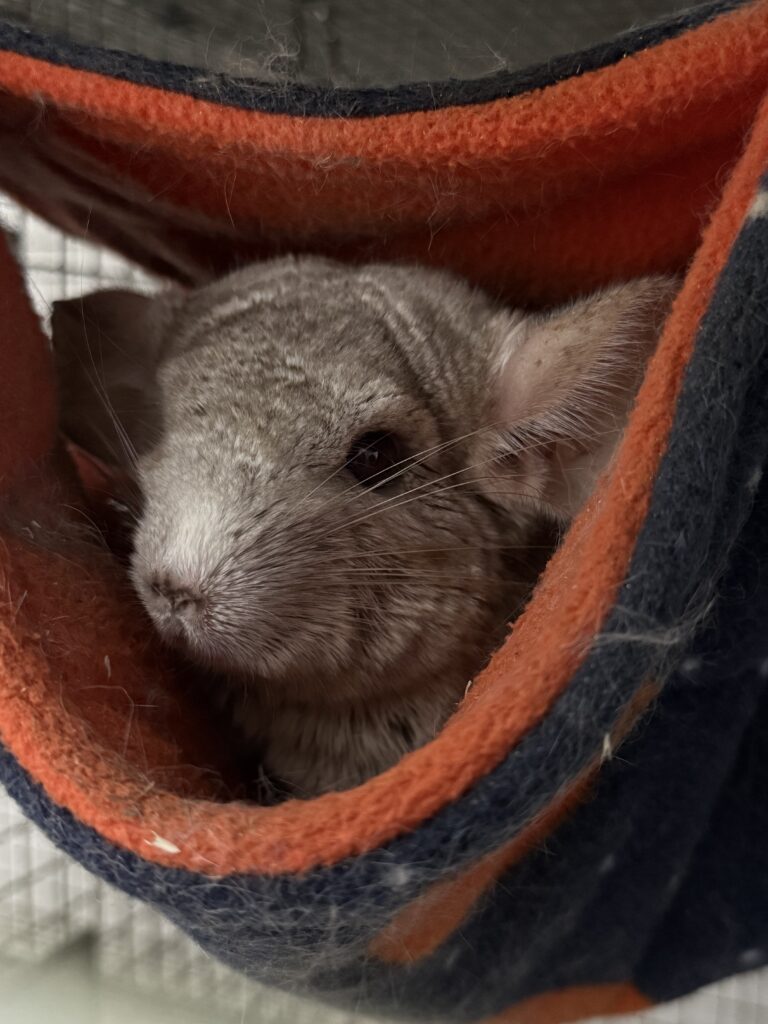
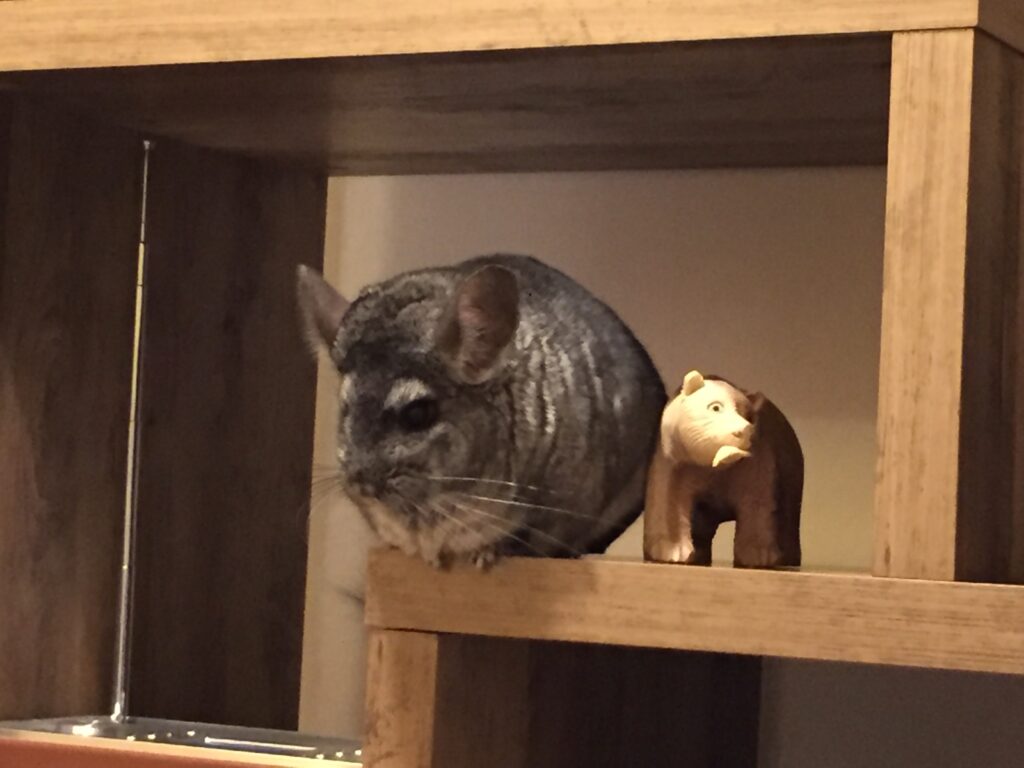
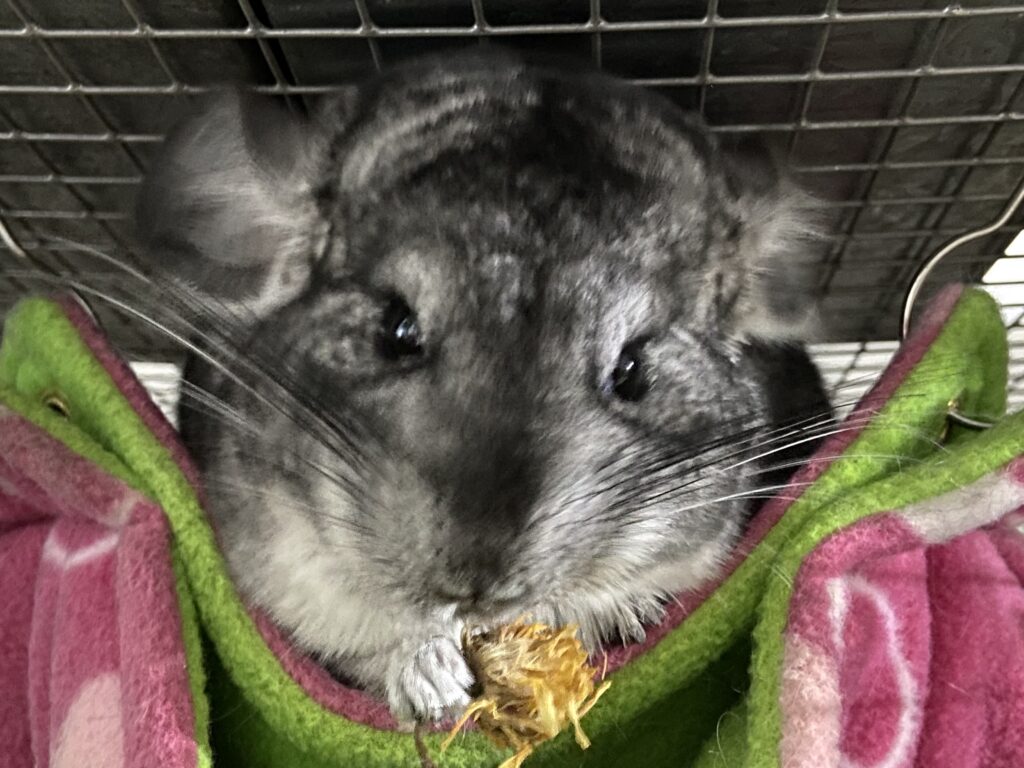
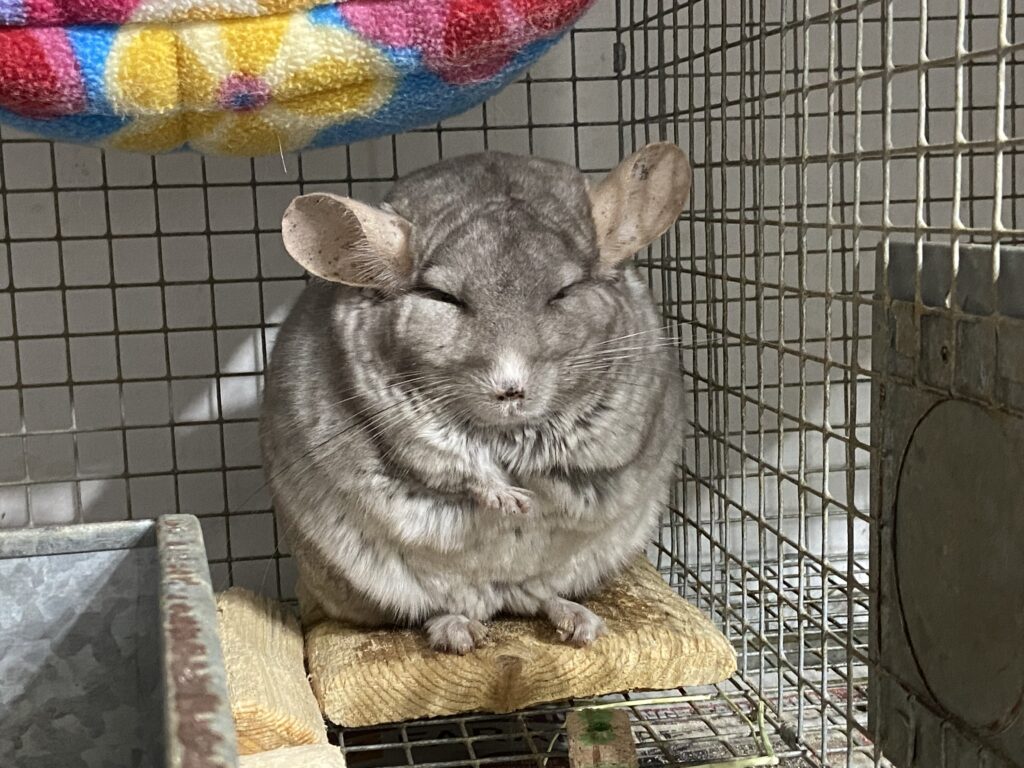
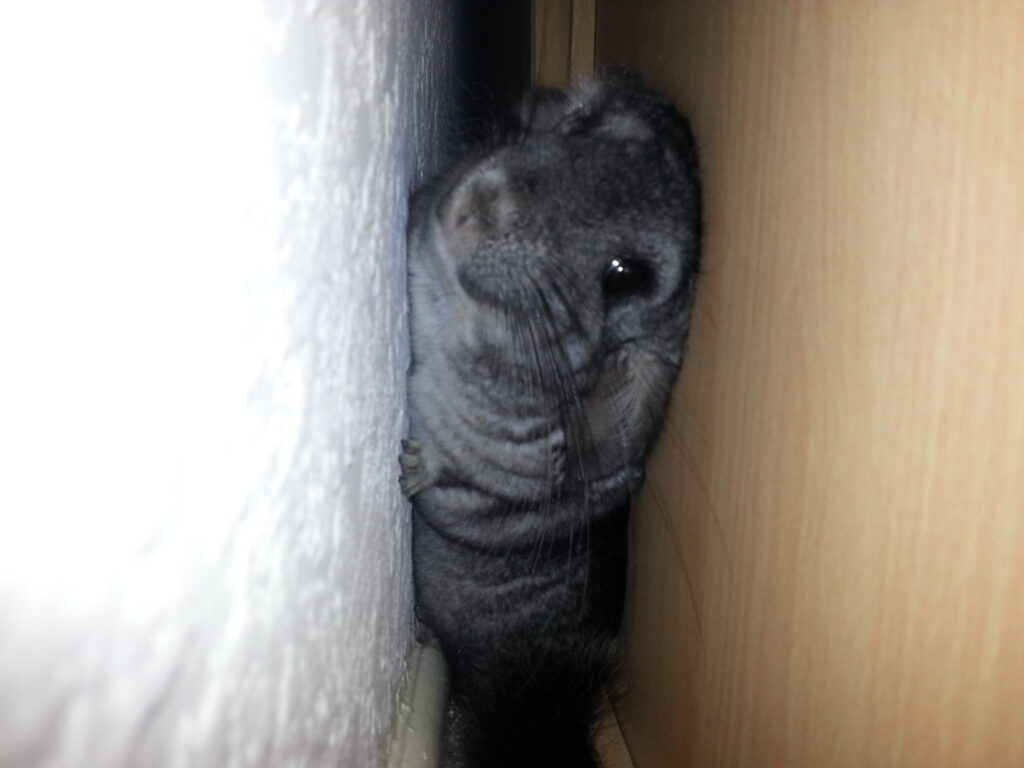
Do chinchillas make good pets? Absolutely, for adults. For children, they do not make good pets.
Chinchillas can be flighty, fast, and awake all night – they have delicate bone structures that are easily crushed by rough handling. They do not sit on your lap like other pets and much prefer to have free out-of-cage time to explore. They will use you as a climbing frame and bounce off your leg, shoulder, head to get where they want.
Chinchillas are shy but curious. They are determined and will explorer the smallest area if they think there is something of interest there. They like height and will climb tight spaces between a wall and cupboard or desk, popping out at the top to peer down at you. Sometimes they require rescuing from high places – so it is important that any exploration space is safe. Chinchilla-proofing a room can take time. They also love stairs, zooming up and down them at great speed.
Some chinchillas bond to their owner, some will be aloof; one of the great things about chinchillas is they have individual characters and getting to know them is part of the fun of being a chinchilla owner.
- Chinchilla: History, Husbandry , and Marketing” by Edwin G. Bowen and Ross W. Jenkins (1969), released and published by Shoots Chinchilla Ranch in March, 1988.
Leave a Reply