
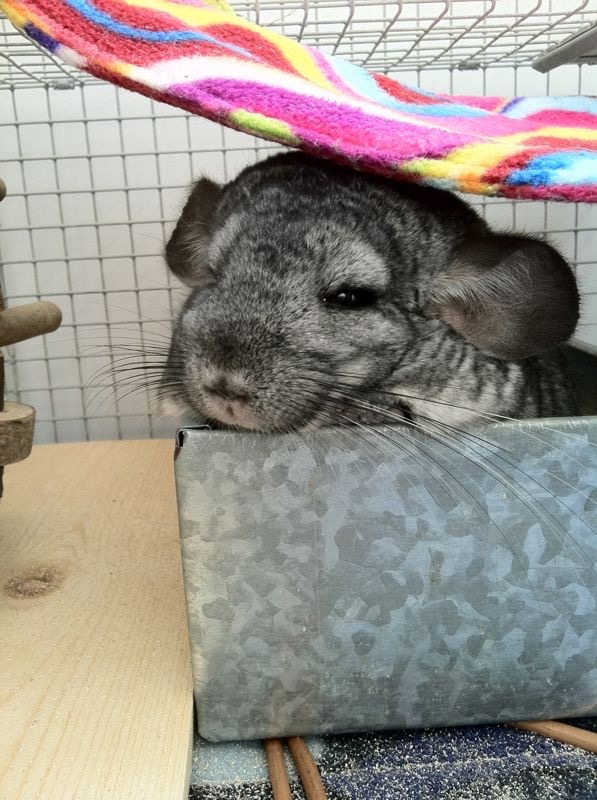
So you’ve got the cage, you’ve got the food and hay, you’ve got the chinchilla …. what now?
Well, in my experience, first time chinchilla ownership can be confusing and contradictory. There’s a lot of information available and some of it is right, some is wrong, and some is down-right dangerous.
Owning a chinchilla is 90% observation. Keeping your eyes peeled on the chinchilla’s behaviour, food intake, droppings and urine output, and cage/environment are keys to healthy, happy chinchillas.
The First Few Days – What to Expect
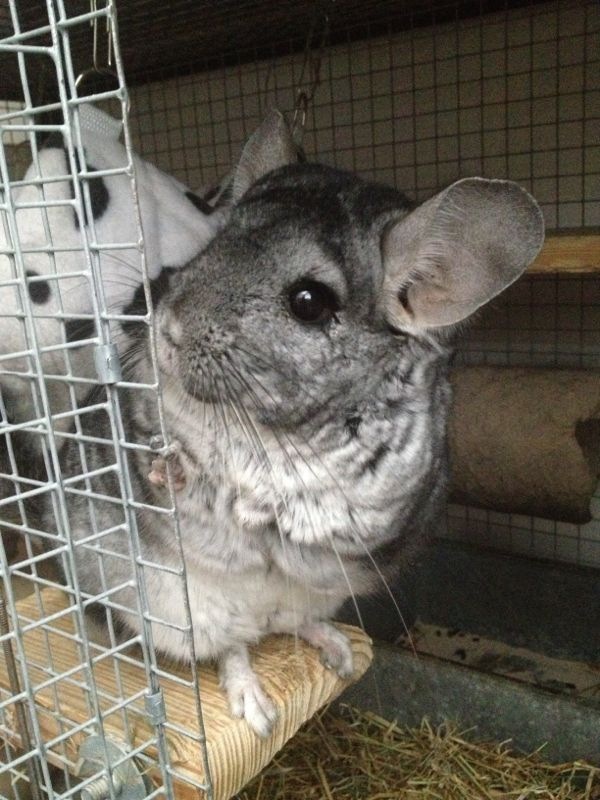
A chinchilla will take time to settle into its new surroundings; new sounds, new cage, new smells, new humans to get used to. It’s a lot for a small furry, whose natural behaviour is as a prey species – you may find your new companion hides for the first few days.
Don’t worry – once your chinchilla gets used to everything, they will ‘come out of their shell’. Chinchillas are curious and love to explore.
Your chinchilla may produce an alarm call. This sounds like a squeaky dog toy and is a signal (to other chinchillas) that there is danger present. In my experience, the faster and higher pitched the call, the more ‘dangerous’ something is – chinchillas have good hearing and often hear things before we do. One of my chinchillas used to alarm call when planes were going overhead – he heard those planes before I did.
Having said that, chinchillas sometimes alarm call in their sleep. This is often a very slow, quiet call and the chinchilla appears fast asleep; eyes closed and in a relaxed pose.
Your chinchilla may take a day or two to settle into eating normally. It is essential that the chinchilla is eating its pellets, hay and drinking. Check the cage floor for droppings, any wasted food, or discarded hay. Also check that the water bottle is working and the water level is going down.
Once the chinchilla is used to its new environment, you will find it comes out of hiding and begins to explore. At this point, it is very tempting to try touching and stroking the chinchilla. Personally, I would avoid this temptation and just sit patiently beside the cage, softly talking to the chinchilla until it comes to you. You don’t want to frighten it. You want the chinchilla’s first experiences with you to be gentle, calm and non-threatening.
When the chinchilla comes to the front of the cage, take some time to continue talking softly – don’t open the cage door or put your fingers through the cage bars. Chinchillas nibble first and you may get your finger bitten.
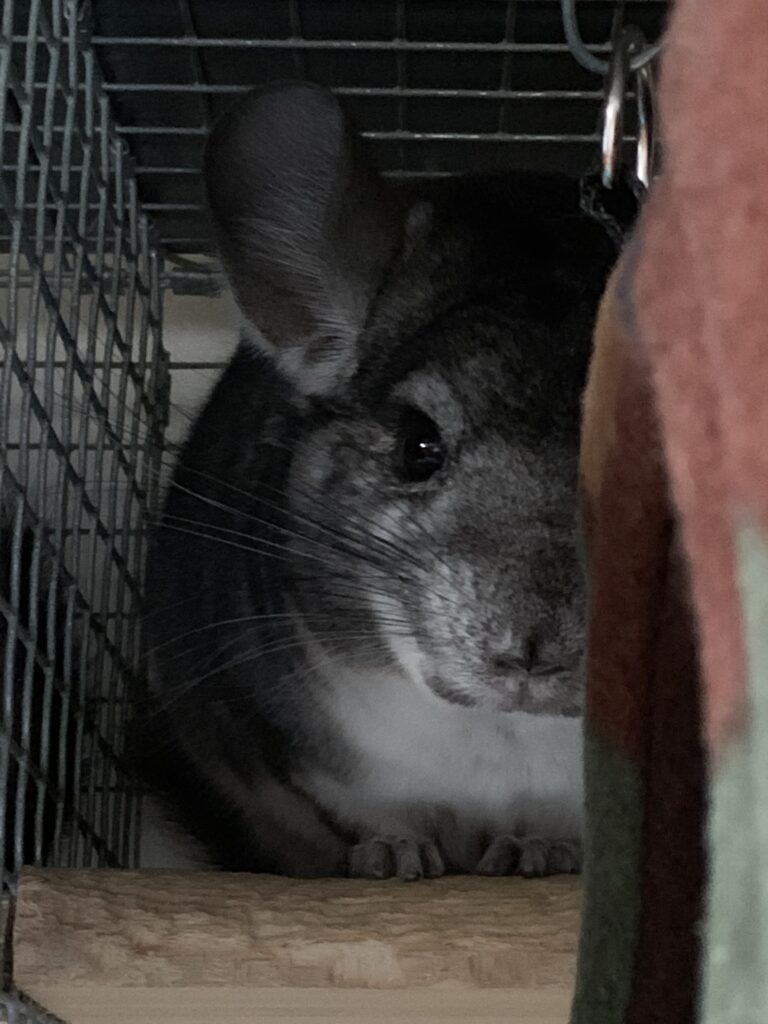
Once the chinchilla is comfortable with you being near the cage, you can carefully open the door and place your hand on the edge of the door. Wait until the chinchilla comes to examine your hand. Stay still and let them sniff, touch, and (possibly) gently nibble your fingers. If the nibbling is a bit too hard, you can make a “cack” sound but try not to pull your hand away. The ‘cack” sound is a warning/cross noise that chinchillas make when they are being groomed too hard or are irritated by something that is being done to them.
This may all take several days – patience is the key here. Take your time.
Once the chinchilla is used to you putting your hand in the cage door and is happily exploring you, it’s time to move on to the next step.
Mutual Grooming
Chinchillas like to groom each other. It’s a sign of bonding and is lovely to watch. With a single chinchilla, you become their companion so it’s important you learn how to groom them.
With gentle fingers, scratch around the chinchilla’s face, ears, and chin. Some chinchilla prefer certain spots for being groomed – several of my chinchillas love to have their lower jawline scratched. I take two fingers and very gently pinch the skin along the jaw, from front to back. If you get the right spots, often the chinchilla will tilt their head and/or lift their front paw in an attitude of bliss. Their whiskers will also go up or forward, depending on where you are tickling them – as these photos show.
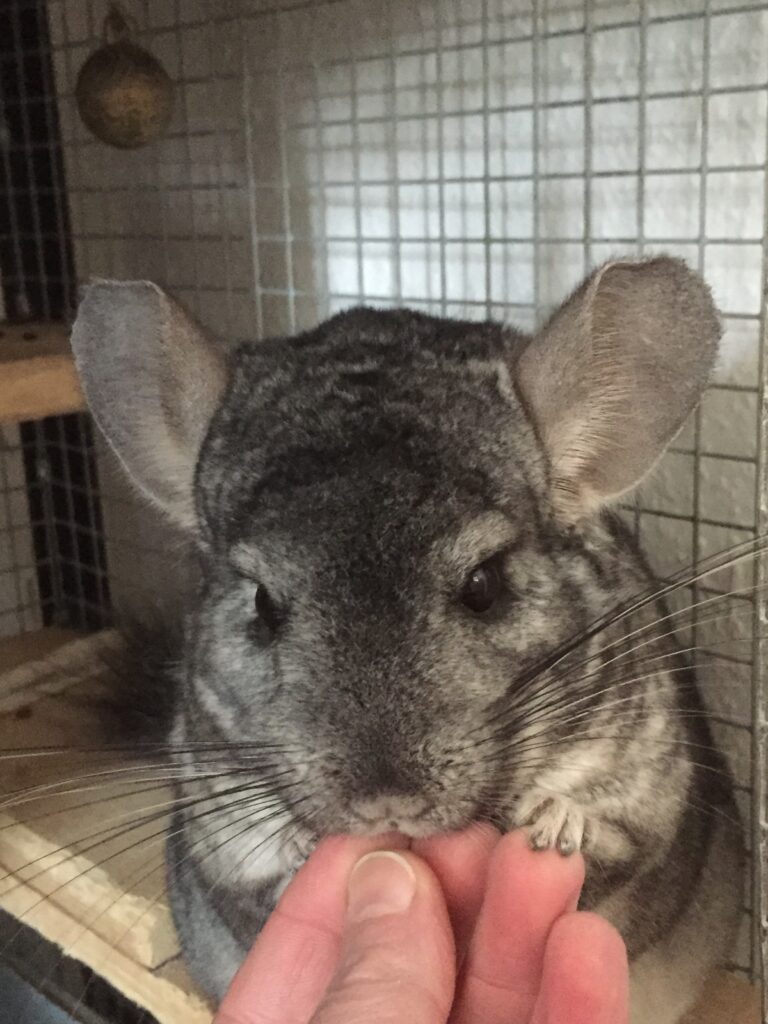
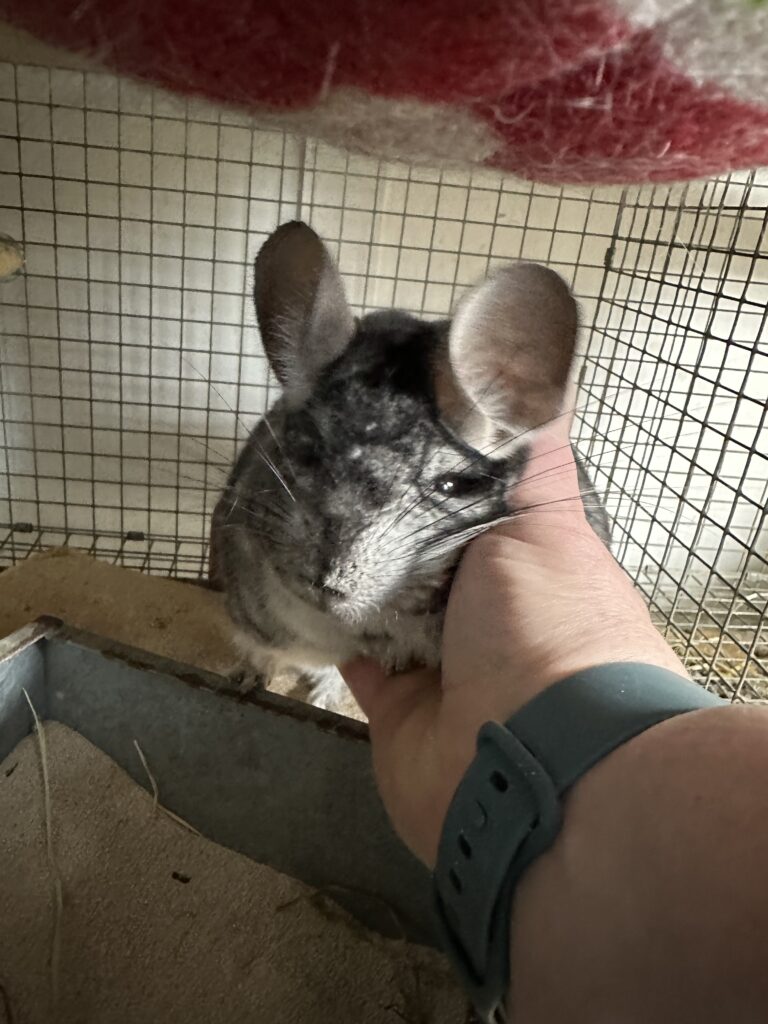
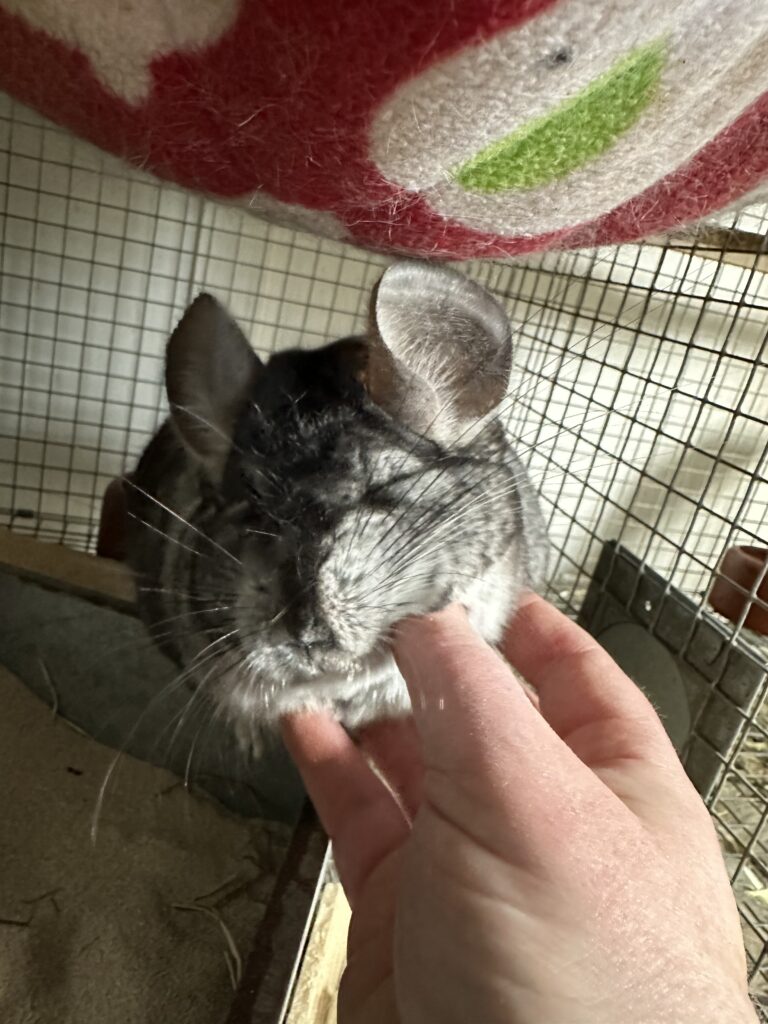
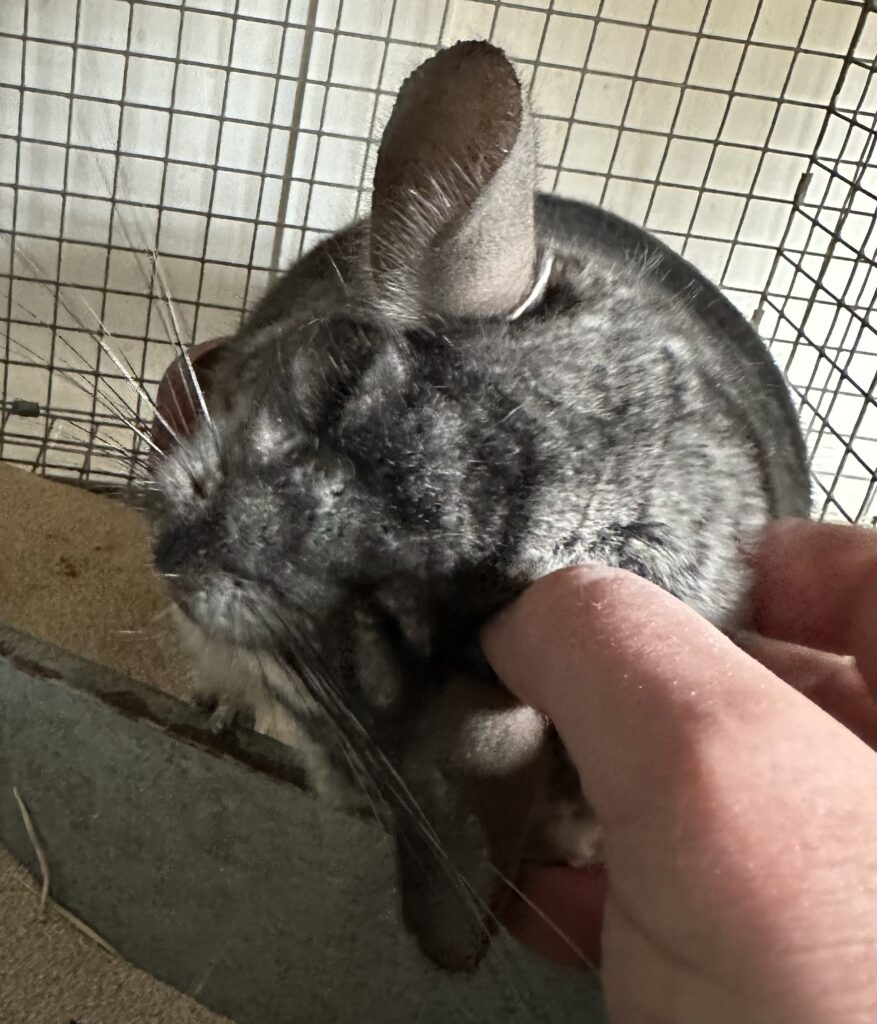
With patience, the chinchilla may reciprocate and groom you back. Gentle nibbles of your fingers, hair on the back of your hands or arms, eyebrows (making sure they don’t chew them off), or your nose, lips, or eyelashes. anything on your hands may be nibbled such as rings, finger nails, or anything they can reach – glasses, zips, sleeves or other clothing, and hair.
If a chinchilla is grooming you back it is a sign that they are relaxed and trust you. It’s a real privilege to be considered “one of the herd” and groomed. Enjoy it when it happens – you’ve made a friend.
Leave a Reply